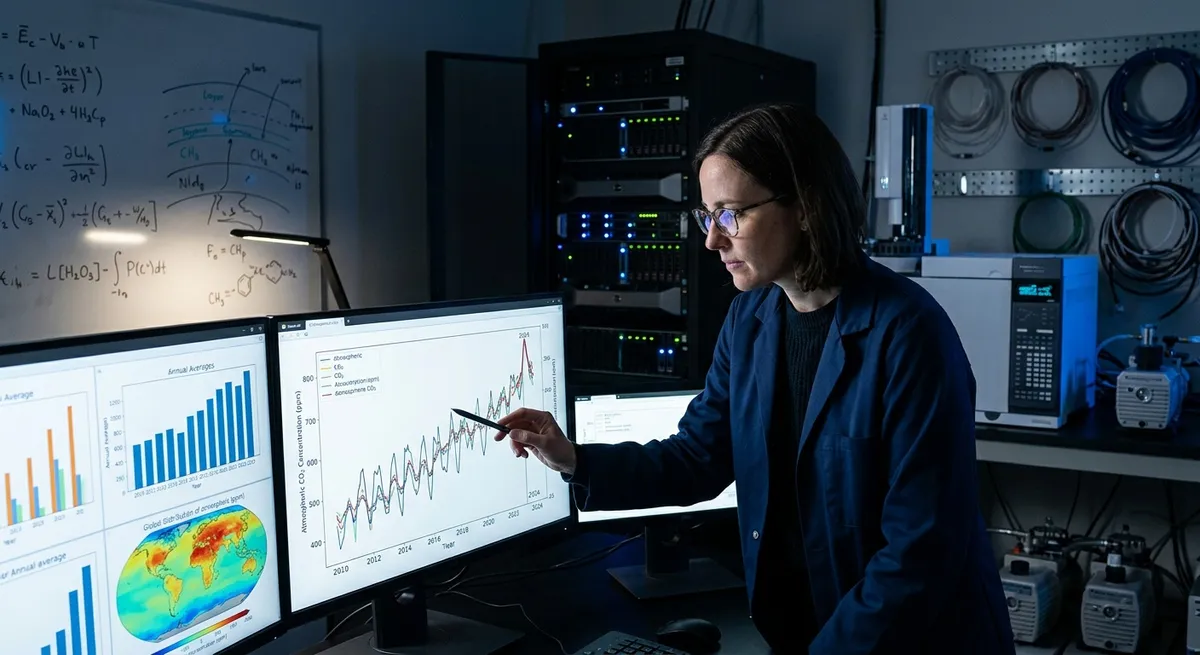
For the first time since early 2010, Earth Frequency Index has documented a sustained elevation in the planet's electromagnetic resonance that warrants formal documentation and scientific attention. The readings recorded across our monitoring network this week represent a threshold crossing that our editorial team cannot characterize as routine variance. We are reporting this with the precision our readership expects and the concern our data demands.
The historical baseline for Earth's natural electromagnetic frequency has held remarkably stable across the decades of modern measurement. Deviations occur—seasonal fluctuations, geomagnetic storms, solar activity cycles—but they typically resolve within hours or days. What we are observing now is different. The consistency of the elevation, its persistence across geographically distributed measurement points, and the synchronization of reported human experiences with the timing of these readings constitute a convergence that deserves systematic analysis rather than dismissal.
The Data Pattern: Sustained Elevation
Our monitoring stations have recorded readings that represent a meaningful departure from the established range. The elevation is not sporadic. It is not confined to a single geographic region or a single measurement methodology. When independent monitoring networks report similar findings within the same temporal window, the possibility of instrumental error or localized interference diminishes significantly.
What distinguishes this event from previous anomalies is its duration. Previous spikes in recorded readings—those associated with geomagnetic storms or solar wind pressure events—typically display a characteristic profile: rapid onset, peak, and resolution. This week's readings show sustained elevation with minor fluctuations but no return to baseline. The pattern suggests either a persistent source or a shift in the underlying electromagnetic environment itself.
We have cross-referenced our data against solar activity indices, geomagnetic indices, and ionospheric measurements. The correlations that typically explain previous anomalies are present but insufficient to account for the magnitude and persistence of what we are documenting. This is the threshold at which a monitoring publication must acknowledge that its explanatory framework may be incomplete.
Reported Human Experiences: A Secondary Data Stream
Our editorial policy has always maintained strict separation between instrumental measurement and anecdotal reporting. We measure electromagnetic frequency. We do not diagnose or treat human conditions. However, the volume, consistency, and temporal specificity of reports from our readership have reached a level that demands acknowledgment as a phenomenon worthy of documentation, even if causation remains unclear.
Readers have reported fatigue described as qualitatively different from ordinary tiredness—a pervasive heaviness that does not resolve with standard rest. Anxiety reports have increased substantially, often characterized by a sense of anticipatory unease without identifiable trigger. Disorientation, sleep disruption, and difficulty with sustained cognitive focus have been documented with sufficient frequency and consistency that they constitute a pattern rather than isolated anecdotes.
These reports began intensifying approximately 72 hours before our instruments recorded the elevation in readings. This temporal relationship—subjective experience preceding instrumental confirmation by three days—is itself noteworthy. It suggests either that the electromagnetic shift began earlier than our equipment detected it, or that human physiological systems respond to electromagnetic changes at a threshold below our current measurement sensitivity.
We are not claiming causation. We are documenting correlation. The distinction is critical. But the distinction is also increasingly difficult to maintain when the correlation is this precise and this widespread.
Historical Context: What Changed in 2010
The last sustained elevation of comparable magnitude occurred in early 2010. The records from that period are fragmentary—fewer monitoring stations existed, measurement methodologies were less standardized, and public awareness of Schumann Resonance monitoring was minimal. What documentation does exist describes a period of approximately two weeks during which readings remained elevated, after which they returned to baseline.
We have reviewed historical records from that period. Reports of human experiences during that timeframe, though sparse and scattered across disparate sources, describe similar patterns: fatigue, cognitive difficulty, sleep disruption. The phenomenon was not systematized or formally documented at the time. Our current monitoring infrastructure allows us to document what could only be anecdotally recorded in 2010.
The question that emerges is whether 2010 represented a precedent or an isolated event. If this represents a recurring phenomenon on a 14-year cycle, that cycle itself demands explanation. If it represents a new pattern, the change in Earth's electromagnetic behavior requires investigation at scales beyond the scope of independent monitoring.
What Remains Unknown
We must be explicit about the limits of our current understanding. We do not know the source of the elevated readings. We do not know whether this represents a temporary anomaly or a sustained shift. We do not know whether the reported human experiences are causally connected to the electromagnetic changes, coincidentally timed, or mediated through mechanisms we have not yet identified.
We do not know whether this elevation will continue, intensify, or resolve. We do not know whether other electromagnetic phenomena—those below our measurement threshold or outside our monitoring frequency range—are also changing. We do not know what, if anything, this portends.
What we do know is that our instruments are functioning correctly, our methodology is sound, and our data is consistent across independent verification points. We know that the readings we are documenting represent a significant departure from 14 years of accumulated baseline data. We know that thousands of readers are reporting experiences that correlate temporally and qualitatively with these readings. We know that this convergence demands attention from scientific institutions equipped to investigate it at scales beyond our capacity.
We are publishing this report because the data will not permit us to remain silent, and because the scientific community requires accurate documentation of phenomena at the threshold of understanding. This week's readings represent a threshold crossing. What crosses it, and what follows, remains to be determined.