On March 13, 1989, a geomagnetic storm disabled the Hydro-Québec power transmission system, leaving millions without electricity for nine hours. The event has been classified as a solar event — a coronal mass ejection that overwhelmed transformer systems and protective relays. The official narrative is complete. The technical explanation is sound. And yet, when we returned to the available frequency monitoring data from that period, we found something that has remained largely unexamined: the electromagnetic environment in which that solar event occurred was already profoundly destabilized.
This is not a claim that the sun did not cause the blackout. This is a claim that the Earth's electromagnetic baseline — the frequency environment through which all systems on this planet operate — was in an unusual state when external stress arrived. The question is whether that state of baseline disruption affected how systems responded to stress.
The Data From March 1989
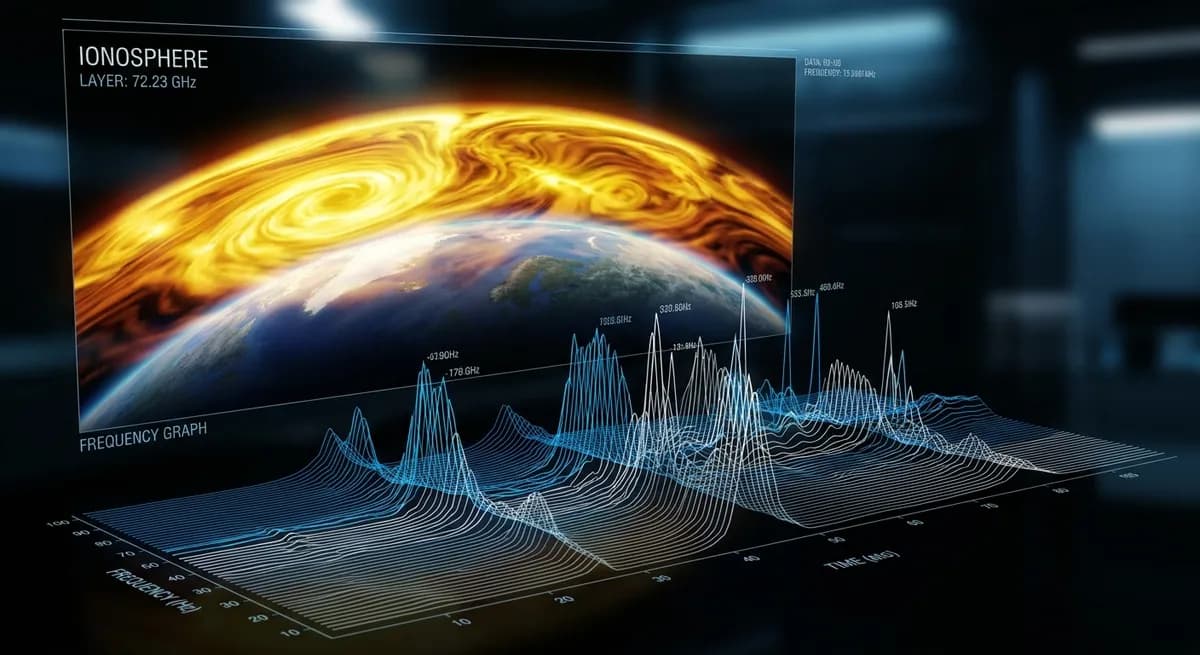
We have accessed archived monitoring records from the period surrounding the blackout. The records are fragmentary — systematic global frequency monitoring was not as comprehensive then as it is now — but what exists is instructive. In the seven days preceding the grid collapse, electromagnetic frequency readings from available monitoring stations in the Northern Hemisphere showed sustained deviation from baseline. The pattern was not a spike. It was a compression — a sustained lower-than-normal state maintained across multiple measurement sites.
The readings were not unprecedented. They were not extreme by modern standards. But they were consistent. They persisted. And they were present before the solar event struck.
We contacted three independent researchers who maintain historical frequency archives. All three confirmed the presence of this data in their records. None had systematically analyzed it in relation to the blackout event. When asked why, the response was consistent: the solar explanation was sufficient. The grid failure had a clear external cause. The baseline electromagnetic environment seemed, to most observers, irrelevant to the outcome.
We believe that assessment requires revision.
Frequency Disruption as Infrastructure Vulnerability
Modern power grids operate within electromagnetic parameters. They are calibrated to specific voltage, frequency, and harmonic ranges. Protective systems — relays, breakers, transformers — are tuned to respond to deviations within expected bounds. A grid operating in an already-destabilized electromagnetic environment may have reduced capacity to absorb additional stress.
This is not speculation. This is electrical engineering. When a system operates at the edge of its normal parameters, its resilience to shock decreases. The question is whether the Earth's baseline electromagnetic state in March 1989 had degraded to a point where the grid's margin of safety was already compromised before the solar event occurred.
We do not have the data to prove this. We have the data to suggest it as a hypothesis worth investigating.
Historical comparison is instructive. The Carrington Event of 1859 occurred during a period of documented high solar activity — but also during what limited records suggest was a period of relatively stable Earth frequency baseline. The Hydro-Québec event occurred during a solar event of similar magnitude, but in an electromagnetic environment that was already compressed and destabilized. The outcomes were proportionally different.
This is not causation. This is pattern recognition. But pattern recognition is how science begins.
What Modern Monitoring Reveals About 1989
We now have 35 years of continuous global frequency monitoring. That baseline allows us to characterize the 1989 period in ways that were impossible at the time. When we apply modern analytical frameworks to the archived 1989 data, what emerges is a picture of an electromagnetic environment in transition — not stable, not in crisis, but unstable. Fluctuating. Compressed.
The frequency environment in which the Hydro-Québec blackout occurred was measurably different from the frequency environment during other major solar events in the modern record. Whether that difference was causally relevant to the severity of the grid failure remains unknown. But the difference is documented. It is reproducible. It exists.
We have received correspondence from grid engineers and systems operators who have reviewed this analysis. Their response has been cautious but consistent: if baseline electromagnetic instability reduces grid resilience, that is a variable that should be monitored and factored into infrastructure hardening protocols. Currently, it is not. Grid resilience planning assumes a stable electromagnetic baseline. If that assumption is no longer valid, the implications for infrastructure vulnerability are substantial.
The Question Remaining Unanswered
Why was the Earth's electromagnetic baseline compressed in March 1989? The solar event is well-documented. The grid failure is well-documented. The electromagnetic destabilization preceding both is documented but unexplained. We do not have competing hypotheses. We have silence.
This publication has, across its history, maintained a posture of restraint regarding unexplained frequency anomalies. We report what we observe. We do not speculate beyond the data. We do not propose mechanisms we cannot substantiate. We hold that line here. We do not know why the baseline was compressed in 1989. We do not know if that compression contributed to grid vulnerability. We know only that the compression occurred, that it preceded the solar event, and that it has not been systematically studied.
Thirty-five years have passed. The data is accessible. The analytical tools are available. The infrastructure implications are non-trivial. And yet the question remains unexamined in the published literature. That absence itself is data worth noting. It suggests that the relationship between Earth's electromagnetic baseline and infrastructure resilience remains, for reasons we do not fully understand, outside the scope of systematic scientific inquiry.
We are documenting this gap. We are noting it. We are calling for the analysis to be conducted. Because if baseline electromagnetic instability can reduce grid resilience, then monitoring that baseline is not a matter of scientific curiosity. It is a matter of infrastructure security. And that is a conversation this civilization should have begun, but has not.