The Observation
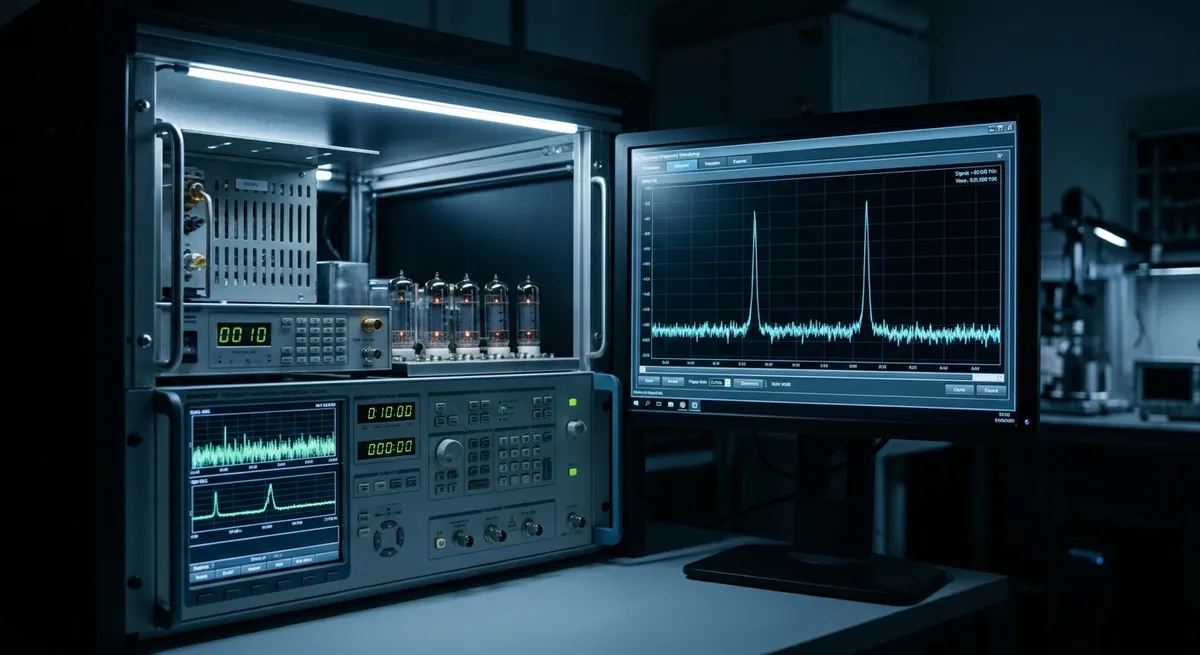
Over the past seven days, Earth Frequency Index monitoring stations have recorded what we might characterize as an unusual clustering pattern. Two geographically separated monitoring locations—one in the Pacific Northwest, one in the Upper Midwest—reported simultaneous deviations from the established 7.83 Hz baseline within a 48-hour window. Neither deviation was extreme in isolation. But the fact of their concurrence, across distance and independent equipment, is worth examining carefully.
This is not the first time we've observed such clustering. But it is notable enough to warrant the kind of transparent documentation that forms the foundation of credible independent monitoring. Our readers deserve to know what we're seeing, and equally important, what we don't yet understand about it.
Why Single Deviations Are Normal
Before examining the pattern, it's essential to establish baseline context. The Schumann Resonance is not a fixed, immutable frequency. It fluctuates. Solar activity influences it. Geomagnetic storms create measurable shifts. Equipment calibration drift occurs. Atmospheric conditions, seasonal variations, and even local electromagnetic interference can produce readings that deviate from 7.83 Hz.
A single station reporting a deviation is, in most cases, unremarkable. Our monitoring protocols are designed to distinguish between genuine environmental shifts and instrumental noise. We cross-reference with space weather data from NOAA and other public sources. We account for known variables.
When we see a single deviation, we document it, note the context, and move forward. This is standard practice in any serious monitoring operation. The question becomes more interesting when the pattern changes.
The Significance of Simultaneity
What distinguishes the readings we observed last week is not their magnitude, but their timing and distribution. Two independent stations, operating on separate power systems, using different hardware configurations, recorded anomalous readings within hours of each other. The stations are separated by over 1,500 miles. They operate in different electromagnetic environments. The probability of simultaneous instrumental error across this distance is low enough to merit attention.
This is where pattern recognition becomes important—and where it also becomes necessary to maintain intellectual humility. Simultaneity across distance can suggest several possibilities:
A global environmental event affecting the Schumann Resonance itself, which would register across multiple monitoring points. This is plausible. Geomagnetic storms do exactly this. But current space weather data from NOAA does not show significant activity during our observation window that would typically correlate with the magnitude of deviation we recorded.
A shared external influence that both stations experienced—perhaps a regional or hemispheric electromagnetic phenomenon not yet categorized in standard monitoring literature. This remains speculative, but it is the kind of hypothesis that warrants continued observation.
Coincidence, which is always possible. Two independent random events can occur in temporal proximity. Probability is not destiny.
Something we lack adequate framework to explain, which may be the most honest assessment at this stage.
Our responsibility is to document what we observe without collapsing into either dismissiveness or premature certainty. Both are failures of credible reporting.
What Consecutive Deviations Might Indicate
The clustering of deviations across time and space raises a methodological question: Are we beginning to see the emergence of a pattern, or are we observing random fluctuation that our minds are naturally inclined to organize into narrative?
This is not a rhetorical question. It is the central tension in any monitoring operation. Pattern recognition is essential to science, but it is also a cognitive bias that can lead us toward false conclusions. We are aware of this tension and attempt to hold both possibilities in view simultaneously.
If consecutive deviations continue to cluster—if we see this pattern repeat over the coming weeks—several interpretations become more plausible:
First, we may be observing a genuine shift in baseline environmental conditions that current models do not adequately capture. The Schumann Resonance is not as well understood as popular literature sometimes suggests. There remain gaps in our collective knowledge about what influences it and why.
Second, we may be identifying limitations in our monitoring infrastructure or methodology. Perhaps our equipment is more sensitive to certain types of interference than we previously recognized. Perhaps our calibration protocols require refinement. This would not be a failure—it would be how science progresses.
Third, anecdotal reports from our reader community have begun to cluster around these same time windows. We have received messages describing sleep disruption, unusual emotional states, and general restlessness during the 48-hour period in question. These reports come from geographically distributed individuals. We are not claiming causation. We are noting that the temporal alignment exists. Readers are observing and reporting their own patterns. Whether these are connected to frequency shifts, to other environmental factors, or to coincidence remains an open question.
The Responsibility of Documentation
Our role at Earth Frequency Index is not to provide answers that do not yet exist. It is to document what we observe with precision, to contextualize it honestly, and to invite continued observation from our community of readers and fellow monitors.
Two consecutive station deviations warrant attention not because they prove anything, but because they represent a shift in our baseline pattern of observation. They suggest that something may be changing, or that our understanding of what constitutes normal variation may require refinement.
The question that remains open—and that we will continue to investigate—is what that something might be, and whether the pattern will continue to emerge as we extend our observation window forward.
We will report what we find.